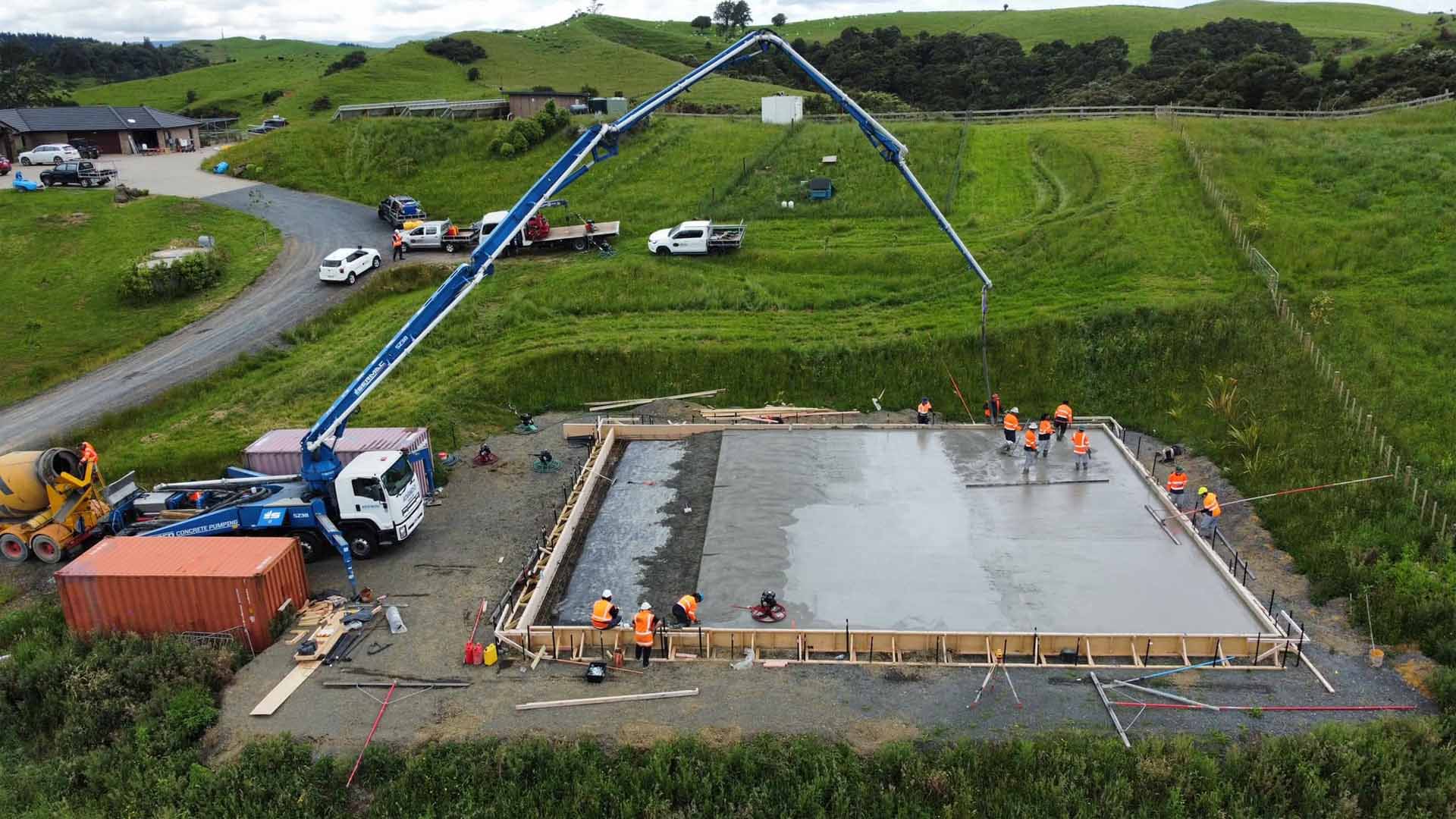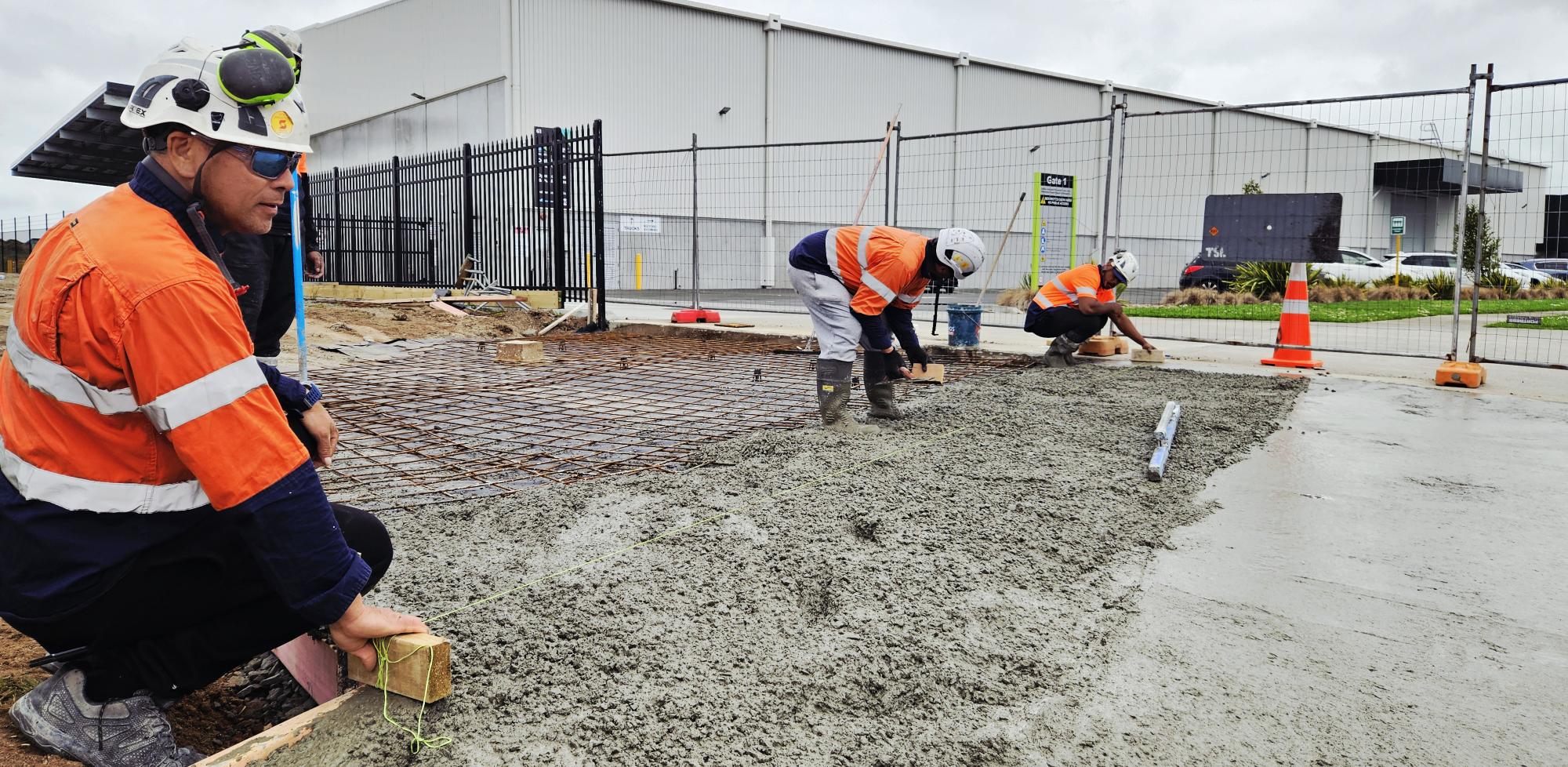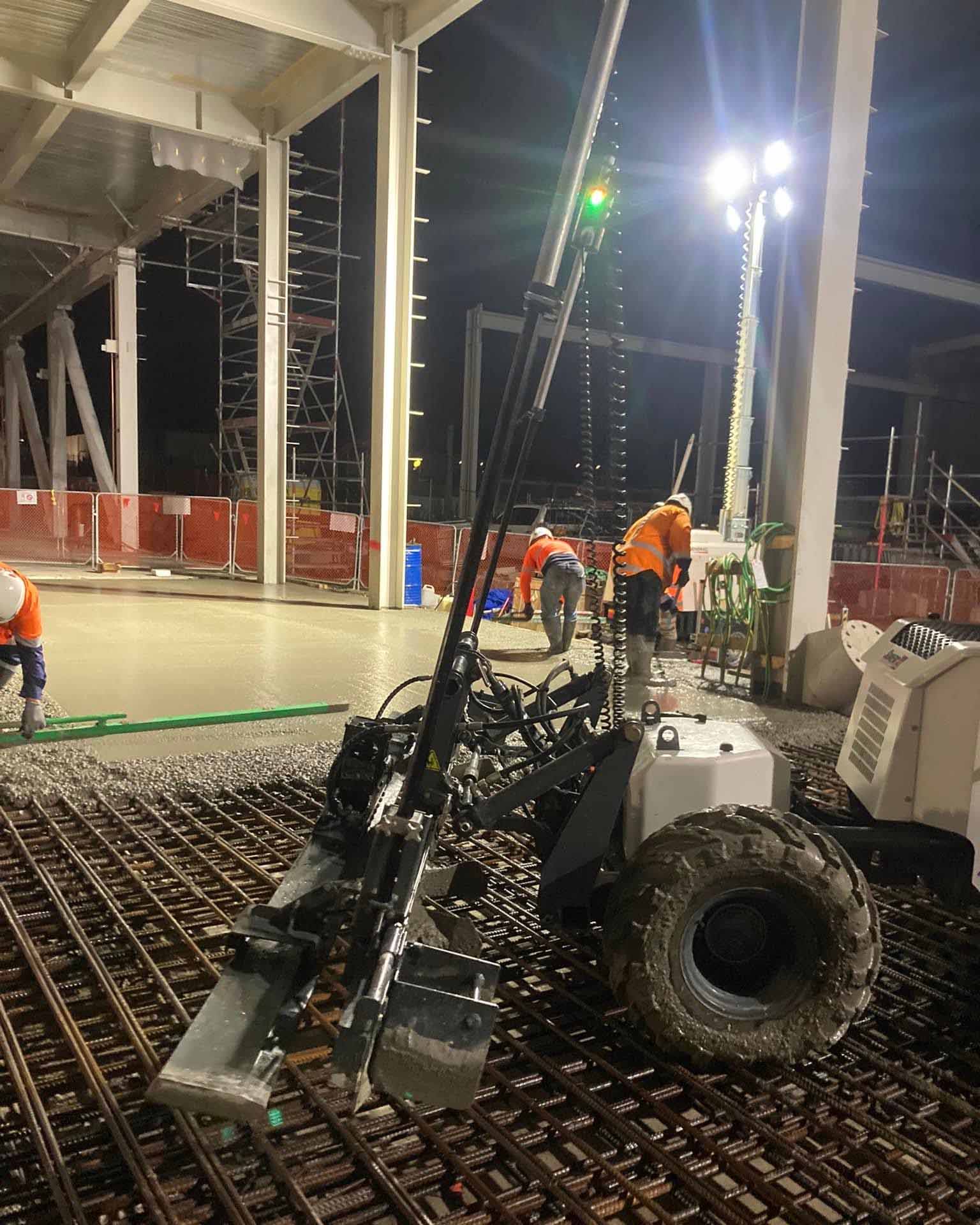


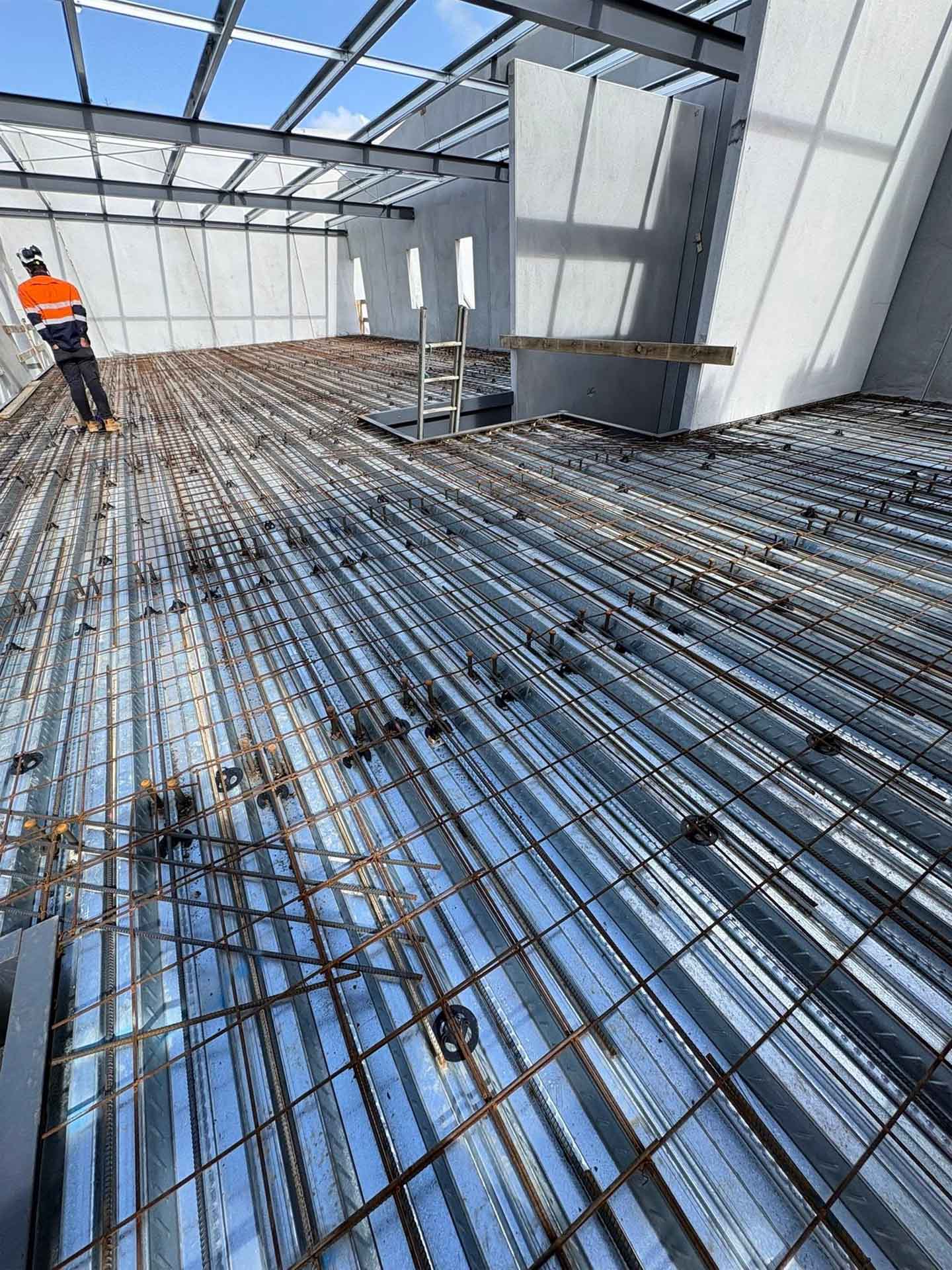
Once the first truck arrives, the clock is running. The work that decides a large pour happens before then. Here are five things to have sorted.
1. Know the Spec
What finish is required, and what will the floor be used for? Racking, forklifts and heavy vehicles all ask different things of a slab.
Get the spec in front of the concrete crew early, so the pour is planned to meet it.
2. Set Clear Responsibilities
Everyone needs to know their role before the concrete arrives. Who’s placing, who’s on the screed, who’s finishing, and who makes the call if conditions change.
There’s no time to work it out mid-pour.
3. Line Up People, Gear and Supply
Crew, machinery and concrete supply have to arrive in step. If one runs ahead of the others, the pour suffers.
Confirm the numbers, the timing and the backup plan.
4. Check the Site
Access for trucks and machinery. Set-out done and checked. Conditions on the day.
A walk over the site before pour day catches problems while they’re still cheap to fix.
5. Keep the Project Team in the Loop
A large pour affects other trades and the wider programme. Tell the project team what’s happening, when, and what you need from them.
Clear communication before the pour saves arguments after it.
Concrete is permanent. Once it’s placed, there’s no easy reset.
How CCSL Does It
This is The CCSL Way in practice. We understand the job, prepare thoroughly, coordinate people, machinery and supply, and check the work throughout.
After the pour, we review how it went and take the lessons to the next one.
Got a Pour Coming Up?
Talk to CCSL early. The sooner we see the programme and spec, the better the plan.